What is user experience and why does management decide about it?
11 min read

What Is User Experience and Why Leadership Should Care
User experience (UX) is the overall relationship between a user and a business, encompassing every interaction from discovering a product to post-sale support. It's not about a single screen or the color of a button — it's about every point of contact a customer has with your brand. User experience isn't limited to visual appearance, and that's exactly where its business weight comes from: a bad experience at any point in the journey means a lost customer, no matter how beautiful your website is.
For a business owner, this means one thing: UX isn't a design expense — it's a revenue lever. Companies with a well-designed experience see lower support costs, higher conversions, and longer-lasting customer loyalty.
So what actually makes up good UX?
- A clear, intuitive user journey from first visit to purchase
- Fast page loading and responsiveness across all devices
- Content and design that make decisions easier for the user, not harder
- Measurable results: fewer abandoned carts, fewer support calls, more repeat visits
Key Takeaways
Good user experience lowers support costs, raises conversions, and improves search visibility, which is why it requires ongoing measurement and iteration, not a one-time redesign.
| Point | Details |
|---|---|
| UX is the whole experience | It covers everything from discovery to support, not just the visual design of a page. |
| Measurable business impact | Affects conversions, support costs, and search engine rankings. |
| The process must be iterative | Research, prototype, test with five users, and repeat the cycle. |
| The obstacles are organizational | Lack of authority and siloed departments stall progress more than budget does. |
| Moxy-web helps with a quick review | Offers an assessment of key obstacles and a pilot test before a broader site redesign. |
Table of Contents
- What Is User Experience and Why It Matters for Your Business
- Which Elements Make Up User Experience
- How to Introduce a UX Process in Your Team
- How to Measure the Success of User Experience
- Which Obstacles Stand in the Way of Good UX at Companies
- Ten Quick Actions for a Better User Experience Today
- Sources
- Frequently Asked Questions
What Is User Experience and Why It Matters for Your Business
User experience isn't a marketing buzzword — it's a strategic factor that directly affects brand recognition and a company's long-term success, as Ranktracker points out. When a customer quickly finds what they're looking for on your site, they don't have to choose between you and a competitor. But when they get lost in confusing navigation or wait on slow loading, they leave without hesitation, often for someone else.
The link between UX and revenue is direct. Intuitive products need less help, which means fewer support calls and fewer returns. Less frustration also means more completed purchases and higher customer lifetime value.
UX also affects search visibility. Page speed and the quality of the experience are closely tied to user engagement and search engine rankings, meaning investing in UX isn't separate from investing in SEO — it's the same money spent twice.
Main business impacts of UX:
- Higher conversion rate thanks to a clearer path to purchase
- Lower support costs because users find answers on their own
- Better search engine rankings due to lower bounce rate and longer time on page
- Greater customer loyalty and more referrals
Expert tip: If you run a business and don't have time for a detailed UX analysis, set aside at least one hour a month to review the path a typical customer takes from search engine to purchase. You'll be surprised how many obstacles you find in five minutes.
Which Elements Make Up User Experience
UX isn't a single discipline — it's a set of interconnected layers. Any one of them, if neglected, can lose you a customer on its own.
- Usability – whether a user can find the buy or contact button without thinking
- Information architecture – how content is organized so the user logically progresses from question to answer
- Accessibility – alt text for images, keyboard navigation, and adjustable font size allow the site to be used by people with limitations too
- Performance speed – loading in under two seconds often decides whether a visitor stays
- Content – clear, understandable language without jargon that guides the user toward a decision
- Visual consistency – colors, typography, and layout that build trust
UX and UI (user interface) aren't the same thing. UI is the look of buttons, colors, and layout — the visual layer. UX is the entire experience, which also includes how fast the page loads, how logical the order form is, and how easily a customer reaches support. A beautiful interface with a slow checkout process is still bad UX, despite excellent UI.
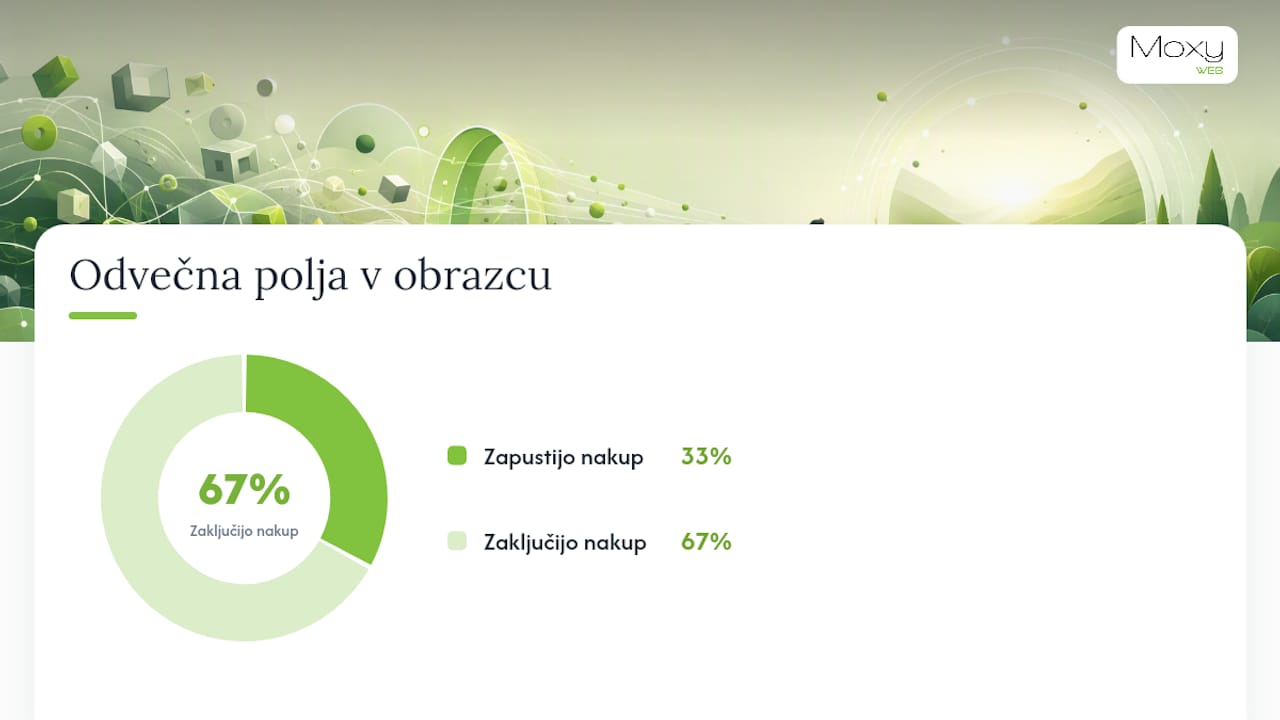
A concrete example: an order form with ten required fields, three of which are unnecessary, will drive away a third of buyers before they even reach checkout.
| UX Element | What Happens If It's Neglected |
|---|---|
| Usability | Users get stuck trying to find basic functions |
| Speed | Every second of delay lowers the likelihood of a purchase |
| Accessibility | Some visitors can't use the site at all |
| Content | Unclear messaging increases uncertainty when deciding |
How to Introduce a UX Process in Your Team
Introducing UX isn't a one-time project — it's an iterative cycle of planning, testing, and improving based on analytics and feedback. For smaller and mid-sized teams, the process can be condensed into five concrete steps you can start this week.
- User research. You don't need to hire an agency for months of research. A short five-question survey sent to customers after purchase, or five quick phone conversations, often reveals more than an extensive study.
- Analyze existing data. Review Google Analytics or a similar tool and find the pages with the highest exit rates. These are your first targets.
- Prototyping. For smaller changes, a paper sketch or a tool like Figma is enough. You don't need to fully build a feature before testing it.
- Testing with five users. Research in UX practice shows that just five test users reveal most serious usability problems. You don't need to wait for a hundred survey responses.
- Iterate and implement. Roll out the change, measure its impact on key KPIs, and repeat the cycle. UX isn't a project you "finish" — it's an ongoing process.
Involving users early in the development process reduces the risk of wrong assumptions and increases the likelihood of conversions after launch. Leadership needs to grant the authority for smaller changes to be tested without long approval chains, otherwise the testing cycle stretches from weeks into months.
Expert tip: Set a "five users, one week" rule. Every major change to the site goes through a quick test with five people before it's rolled out to the whole audience.
For concrete steps on redesigning existing sites, also check out practical steps for improving user experience.
How to Measure the Success of User Experience
Without numbers, UX is just an opinion. Measurement should include page load time, bounce rate, Net Promoter Score, and the share of successfully completed tasks, since only quantified data allows for a before-and-after comparison.
Quick tests any team can run without a large budget:
- Click testing – where users actually click on the page
- Session recordings – watching real visitor behavior
- A/B testing – comparing two versions of a page using real traffic
- Quick usability test with five users – uncovers most critical issues in a single day
| Metric | What It Tells You | When to Track It |
|---|---|---|
| Conversion rate | Share of visitors who complete the desired action | Continuously, after every major change |
| Bounce rate | Share of visitors who leave immediately | For landing pages and campaigns |
| Load time | How fast the page responds | Monthly, or after every upgrade |
| Net Promoter Score | Customers' willingness to recommend | Quarterly |
You don't need to buy expensive licenses to get started. Google Analytics covers basic behavior tracking, session-recording tools often offer free tiers for lower traffic, and quick usability tests only require five volunteers and one hour of time. As a company grows, it makes sense to add specialized A/B testing tools, but the first steps are accessible to any budget.
Which Obstacles Stand in the Way of Good UX at Companies
Many companies fail to include UX in strategic decisions, most often because of a lack of authority over UX decisions, a reactive approach, and siloed departments where marketing, development, and support don't share the same data.
The solutions are practical and don't require a large budget:
- Set your own UX KPIs (conversion rate, load time, NPS) and include them in regular business reports
- Fold UX goals into existing OKRs instead of treating them as a separate "UX project"
- Run one small pilot project (for example, redesigning a single form) and use the results to win leadership support for a broader rollout
Expert tip: In the next 30 days, pick a single user journey — for example, the purchase process — and test it with five users. Concrete evidence convinces leadership faster than any presentation.
Ten Quick Actions for a Better User Experience Today
- Check your homepage's load speed (owner: development)
- Trim your order form down to only the essential fields (product)
- Add alt text to every image (content)
- Simplify your main menu to a maximum of five items (product)
- Check text readability on mobile devices (design)
- Add a clear call-to-action button to every key page (marketing)
- Run five quick user interviews (product)
- Review bounce data for your three most-visited pages (marketing)
- Test the checkout process from start to finish (development)
- Simplify error messages in forms (design)
Priority goes to the first three items, since they deliver the fastest measurable results. For more ideas on current approaches, check out web user experience trends.
A Short Perspective from the Author: How We Approach UX at Moxy-web
At Moxy-web, we treat UX as a business decision, not an aesthetic add-on. The biggest mistake we see with clients is testing only after launch, when a fix has already become expensive. A good process brings the user in earlier, not later.
When You Need an Outside Perspective on Your User Experience
Many companies run into the same realization: an internal team is too close to the product to see where users get stuck. Moxy-web offers a quick UX review, where we identify the three to five biggest obstacles on your site, without a lengthy audit process. This can be followed by a pilot test of a key flow, such as the order form or checkout process, where we try out changes on real users before rolling them out across the whole site.
It's worth reaching out to us when you notice a drop in conversions, a high cart abandonment rate, or simply aren't sure where users are losing patience. You can expect concrete recommendations, not generic advice. Visit Moxy-web and describe your case — the first conversation doesn't commit you to anything.
Sources
For a deeper dive into the topic, we recommend the following sources:
Frequently Asked Questions
What is user experience in one sentence?
User experience is the overall relationship between a user and a business, encompassing every interaction from first contact to post-sale support.
How does UX differ from UI?
UI is the visual layer — the look of buttons and colors — while UX covers the entire user journey, including page speed and how easy it is to complete a purchase.
Which metrics should you track first for UX?
Start with conversion rate, bounce rate, and page load time, since these three metrics show the fastest where users get stuck.
How many users do I need for a basic usability test?
Five test users typically reveal most critical usability issues in practice, which is enough for a first iteration.
How quickly can a company improve UX without a big budget?
Within a single week you can shorten forms, fix load speed, and run a few quick customer interviews — often the cheapest and fastest actions available.
Does Moxy-web also help with smaller UX reviews?
Yes, Moxy-web offers a quick review of the key obstacles on a website and a pilot test of a specific flow before the change is rolled out across the whole site.